Civics credentialing

Civics Credentialing is a nonpartisan initiative of Team Democracy that establishes shared standards and digital credentials recognizing civic knowledge, democratic norms, and institutional trust — without endorsing political parties, candidates, or outcomes.

Credential Provider Information
"Politics ought to be the part-time profession of every citizen who would protect the rights and privileges of free men." - Dwight Eisenhower

Polarization erodes trust

Toxic polarization has eroded trust in the government and the political profession from 75% during Eisenhower’s administration to 20% today.  Divisive polarization threatens the institutions and processes that support our constitutional democracy.

Civics Credentialing addresses the challenge by creating shared, nonpartisan standards that reinforce democractic norms and civic responsibility

Moving average of % who say they trust the government (Pew Research Center)
Credentialing
Enhances Trust

Credentialing systems are successful at improving the quality, effectiveness, and value of dozens of professions, from medicine to project management.
In the civic context, credentialing is not regulatory or partisan - it is a voluntary standards-based signal of shared democratic values.

  • Establishes standards for individuals and organizations

  • Encourages collaboration

  • Encourages investment and activity in standards adherence

  • Improves public image

digital credentials

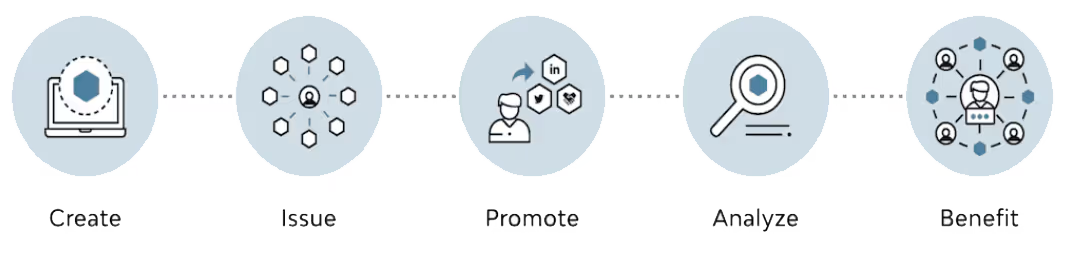
The Civics Credentialing System leverages state-of-the-art open digital credentialing technology. Credentials can be shared through social media, website links, and other means to display a commitment to constitutional democracy and encourage others to participate.  Credential Pathways encourage the development of core skills and deepen involvement in Democracy.

Digital credentials recognize participation and learning; they do not confer legal authority, licensing, or regulatory power.

Learn More About The Civics Credentialing Initiative

Civics credentialing framework

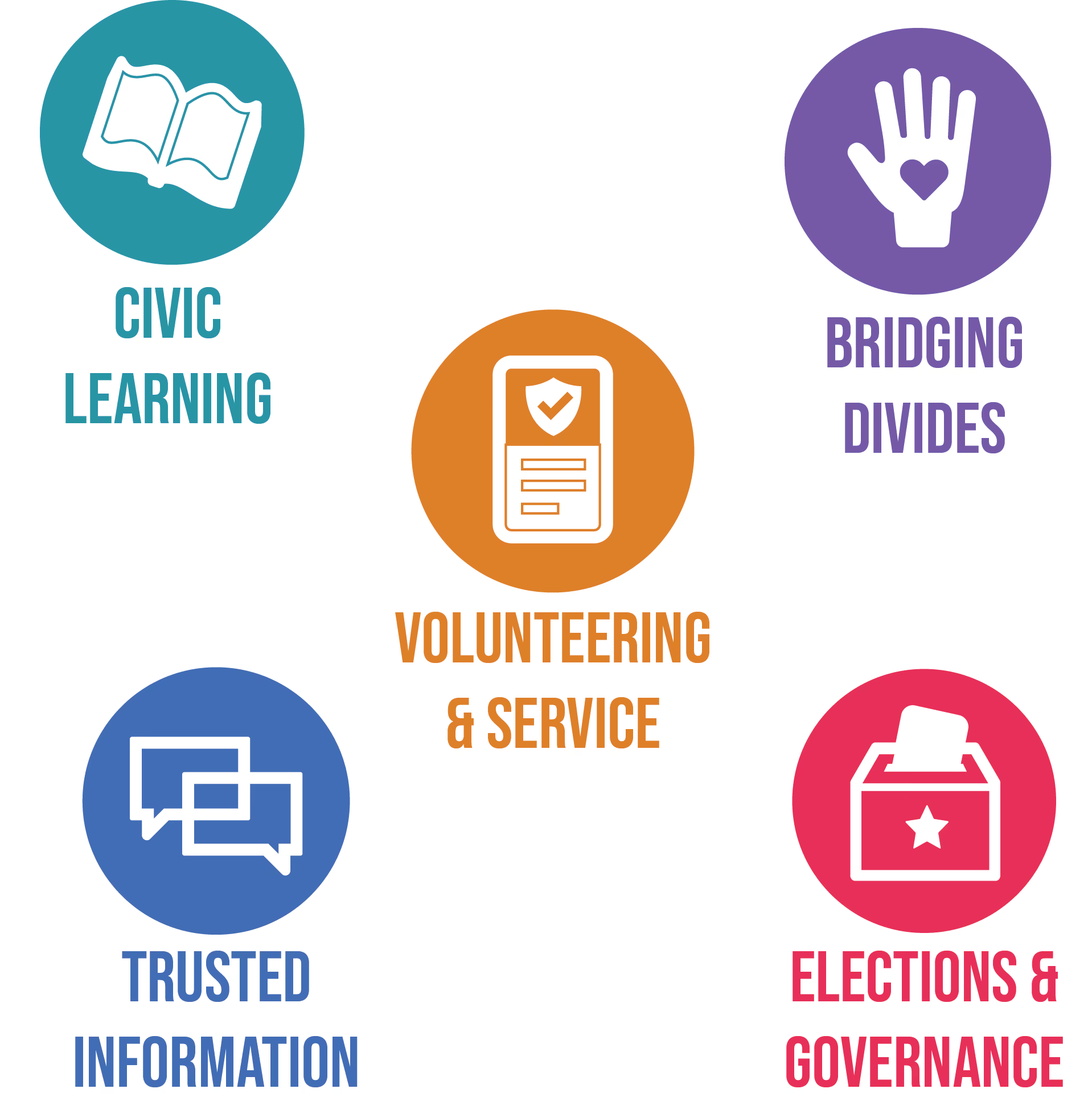
The Civics Credentialing Initiative strengthens our democratic republic by establishing a non-partisan framework that incentivizes pro-democracy behaviors on the part of citizens, candidates, officeholders, and organizations. Credentials are offered from nonpartisan nonprofits that are committed to the core principles and processes of democracy.  They provide common ground that bridges the current partisan divides.

The Civics Credentialing Framework defines voluntary, nonpartisan standards that individuals and organizations may choose to adopt.

civic learning

What it is: A standards-based pathway recognizing civic knowledge and understanding of democratic principles.
Why it matters: Strong civic literacy helps people engage thoughtfully and responsibly in public life.
What it is not: It is not political advocacy or an endorsement of any party, candidate, or policy agenda.

Choose free programs and events as short as half an hour to as long as a semester.  Your earned credentials will let your friends and followers know that you're serious when it comes to understanding more about our democratic institutions, and our civic responsibilities as American citizens.  

bridging divides

What it is: A credential pathway recognizing skills and behaviors that support respectful dialogue and cooperation across differences.
Why it matters: Healthy democracies depend on constructive disagreement, problem-solving, and social trust.
What it is not: It is not a political persuassion program or a tool to promote partisan viewpoints.

Americans will always have differences.  What weakens us is the toxic polarization and tribal instincts that drive mistrust and hostility, both inside and outside of politics.  Earn digital bridging credentials through free programs, courses and events that can help heal America's divide and strengthen our constitutional democracy.

Trusted information

What it is: A pathway focused on information literacy—how people evaluate sources, verify claims, and reduce misinformation risk.
Why it matters:
Shared facts and reliable sources help communities make better civic decisions.
What it is not: It is not a media “truth authority,” content censorship, or a partisan narrative filter.

Sources of information are more diverse than ever. The challenge for each of us is to identify which information sources are most trustworthy, and why. Our Trusted News pathway provides the tools needed to understand and evaluate the sources of information that we all consume.

elections & governance

What it is: A pathway recognizing understanding of election administration, democratic governance, and civic processes.
Why it matters: Clear, trusted processes strengthen confidence in democratic institutions and outcomes.
What it is not: It is not electioneering, campaigning, or support for any candidate, party, or electoral outcome.

Trusted elections are made possible by a consensus on shared rules and a shared commitment to self-government, ensuring the predictable and peaceful transfer of power. Our Trusted Elections pathway offers a means for each of us to effectively promote fair, inclusive, transparent, and responsive governance that will help strengthen our democracy, and build understanding and confidence in our lawful electoral processes.

Volunteering & service

What it is: A pathway recognizing civic participation through service, volunteering, and community contribution.
Why it matters: Service builds stronger communities and reinforces shared responsibility in civic life.
What it is not: It is not a requirement for public benefits, employment, or political participation.

Throughout America's history, service to our country, whether at home or abroad, has been a hallmark of our identity and our strength. It unifies our sense of purpose, and leaves us less polarized as a nation. Check out the initiatives and opportunities that offer digital credentials for  public service and volunteering.